
We all love standards – that’s why there are so many…….
An overview of how PRODIGY caters for all (well, most) formats
Once upon an analogue time it was just a matter of – mic or line level? Balanced or unbalanced? And how many of each? Well, those questions still exist, but the digital audio world we now all live in has made the ability to cater for many other audio formats essential.
Happily, DirectOut’s PRODIGY units can make this conundrum less of an issue. PRODIGY uses a modular I/O system that lets the user fit whatever modules are needed to do the job in hand. This is especially useful for system rental companies, who can maintain an inventory of I/O modules and load their PRODIGY units to suit each project.
Interconnecting audio products from different manufacturers, using ostensibly “standard-compliant” interfaces has not always been as straightforward as the word “standards” might imply. Invisible issues like device recognition, jitter, sample rate and sync compatibility have often left engineers scratching their heads. DirectOut have put a great deal of effort into addressing these potential problems, and it has been shown that devices such as PRODIGY raise far fewer interconnection snags than other manufacturers’ products. In fact, several other well-known manufacturers use DirectOut devices as a “reference standard” to test the compatibility of their own products.

I/O for all formats
PRODIGY units have three types of rear panel I/O slots: these are:
- Networked audio interfaces for AoIP and Layer 2 (L2) protocols, plus MADI
- Dedicated MADI I/O
- “Converter” modules, which cater for analogue and AES3 signals.
Consequently three distinct ranges of I/O modules are available.
The number of slots of each type varies with PRODIGY models, and is summarised in the table below.

Note that the slot complement is independent of PRODIGY version – the quantity of slots and the ability to fit whichever modules are needed applies equally to ESSENTIAL, ADVANCED and UNLIMITED versions of both MP and MC models.
PRODIGY’s ability to support multiple network audio formats as well as multiple MADI inputs allows DirectOut’s EARS™ system to automatically switch to an alternative multitrack audio source in the event of signal loss. You can read more about EARS here.
Modules for networked audio
I/O Modules are available for use with either IP Layer 3 AoIP network protocols such as Dante, Ravenna or Layer 2 (L2) protocols such as AVB Milan and SoundGrid DirectOut’s HD Sample Rate Conversion is available as an option on all modules.
All modules come with an empty SFP carrier for a cartridge of the user’s choice (optical or copper), and dual RJ45 standard gigabit Ethernet ports. Redundant operation is possible with either dual Cat 6 connectivity, or a combination of fibre and Cat 6.
DANTE modules

The Dante AoIP modules support 64 channel operation at 44.1/48 kHz sample rate (1FS), 32 channels at 2FS and 16 channels at 4FS. They are compliant with AES67 and SMPTE ST2110-30 with Dante Domain Manager.
- DANTE.IO
- DANTE.SRC.IO (incl. HD-SRC)
RAVENNA modules
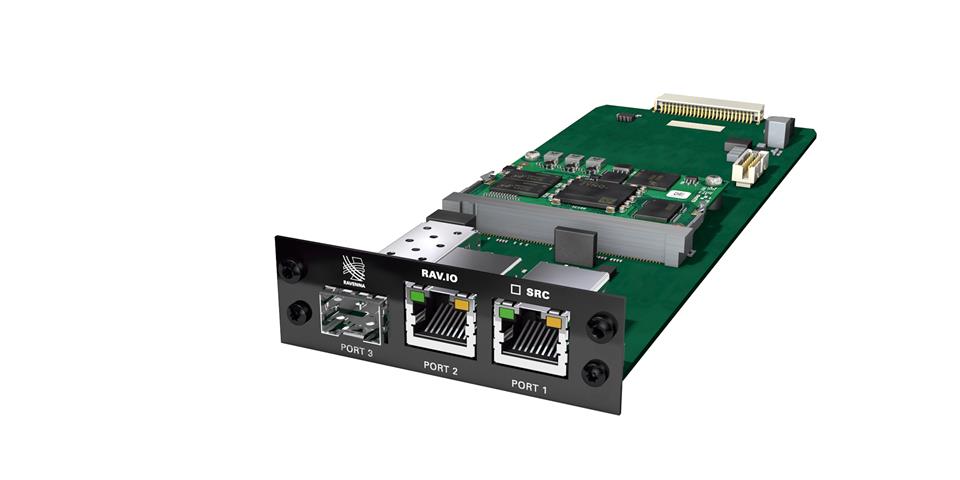
The Ravenna AoIP modules support 32 streams and 128 channel operation at 44.1/48 kHz sample rate (FS), 64 channels at 2FS and 32 channels at 4FS. They are compliant with AES67 and SMPTE ST2110-30/31, and also with NMOS IS-04 (stream discovery) and NMOS IS-05 (connection management).
- RAV.IO
- RAV.SRC.IO (incl. HD-SRC)
AVB/Milan modules
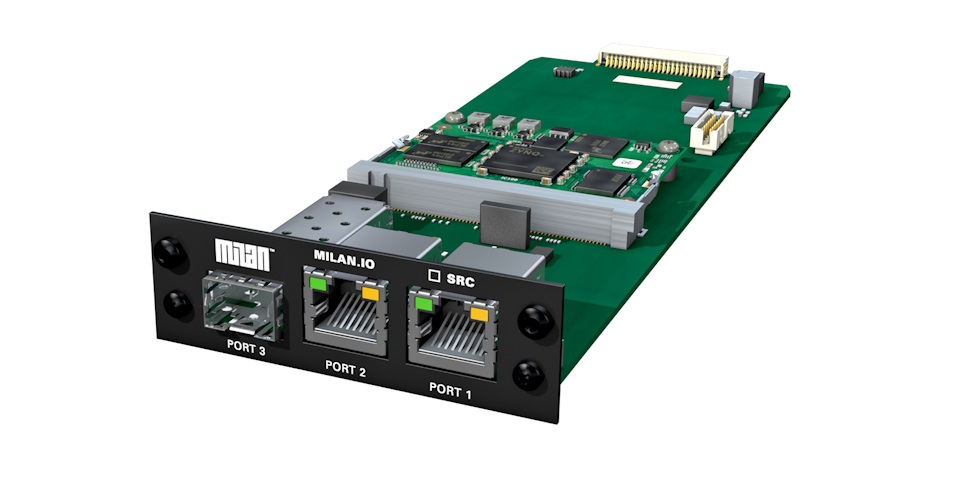
AVB/Milan is a “next generation” Layer 2 (L2) protocol defined by the Avnu Alliance. It offers improved interoperability between different manufacturers’ equipment, and guaranteed audio bandwidth allocation avoiding contention with other data streams. The Prodigy Milan.IO modules support 128 audio channels at 44.1/48 kHz sample rate (1FS), 64 channels at 2FS and 32 channels at 4FS.
- MILAN.IO
- MILAN.SRC.IO (incl. HD-SRC)
SOUNDGRID modules
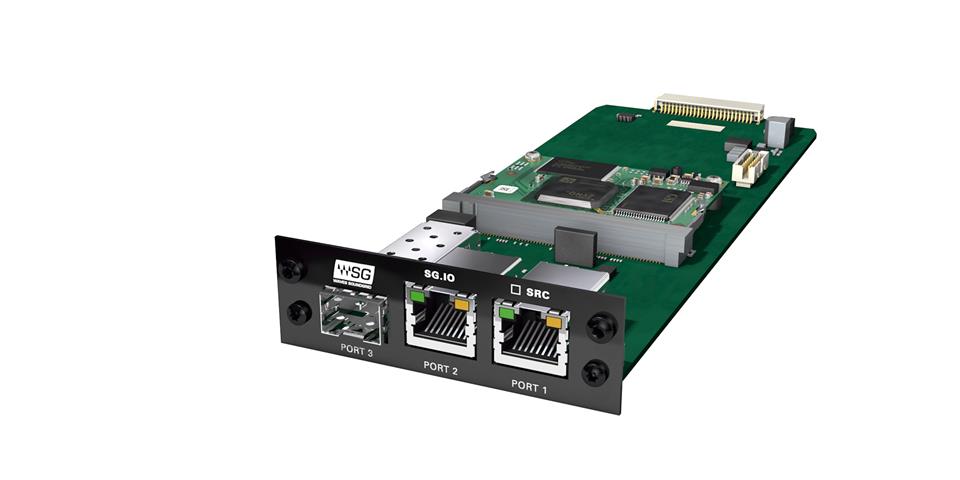
SoundGrid also uses IP Layer 2 protocols; the modules support 128 channel operation at 44.1/48 kHz sample rate (1FS) and 64 channels at 2FS. They can be remotely controlled using SoundGrid Driver.
- SG.IO
- SG.SRC.IO (incl. HD-SRC)
MADI modules
MADI I/O Modules are available with BNC connectors for “copper” connectivity, a dual SC optical connector (singlemode or multimode), or with an empty SFP carrier for the user’s own choice of interface.
MADI I/O modules are available in two physical sizes: the compact type, which fit the dedicated MADI slots, cater for 64 channels and are compatible with all PRODIGY models. The larger versions permit operation with up to 128 (all PRODIGY models) or 256 channels (PRODIGY.MX only).
All MADI ports provide 64 channel operation at 44.1/48 kHz sample rate (1FS), 32 channels at 2FS or 16 channels at 4FS. All modules support 56/57/64 channel operation with 48k or 96k frames. They are AES10 compliant.
64 channel modules
The compact modules are available with BNC connectors for “copper” connectivity, a dual SC optical connector (singlemode (SM) or multimode (MM)), or with an empty SFP carrier for the user’s own choice of MM/SM optical or coaxial interface.
The modules provide 64 channel operation at 44.1/48 kHz sample rate (FS), 32 channels at 2FS or 16 channels at 4FS. The modules support 56/57/64 channel operation with 48k or 96k frames. They are AES10 compliant
BNC.IO

- IO – two 75 ohm BNC connectors
SC.IO

- IO – SC optical connector, multimode
- IO – SC optical connector, single mode (Note: blue connector)
SFP.IO
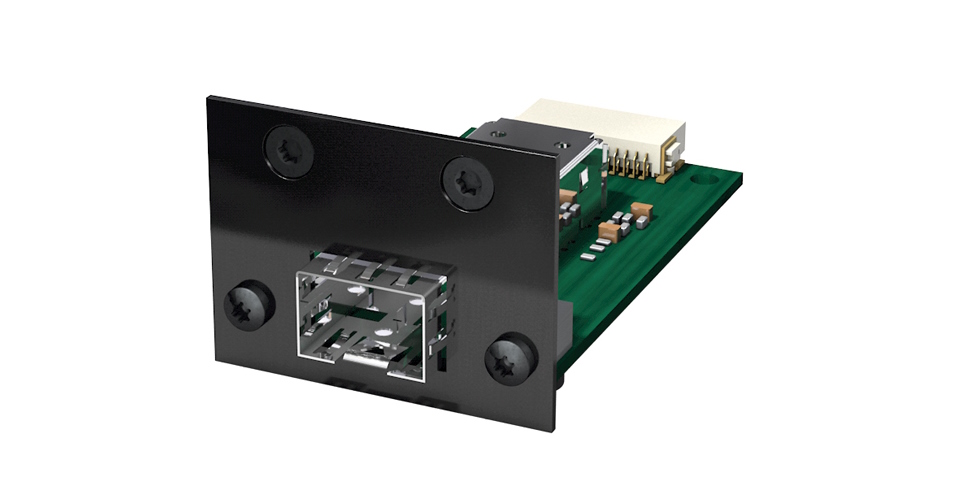
- IO – empty SFP carrier; can be fitted with optical or coaxial cartridge to suit user preference.
128 channel modules
MADI2.SRC.IO
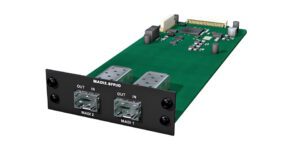
- 128 channels: two empty SFP carriers; can be fitted with optical or coaxial cartridges to suit user preference. Includes HD Sample Rate Conversion
MADI2.BNC.SRC.IO
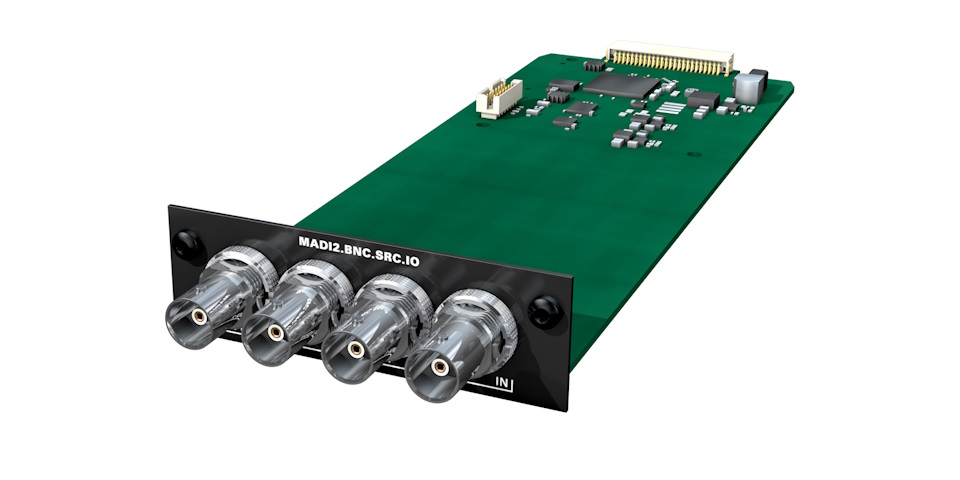
- 128 channels; four 75 ohm BNC connectors (2 in/2 out) Includes HD Sample Rate Conversion
256 channel modules (PRODIGY.MX Only)
MADI4.IO
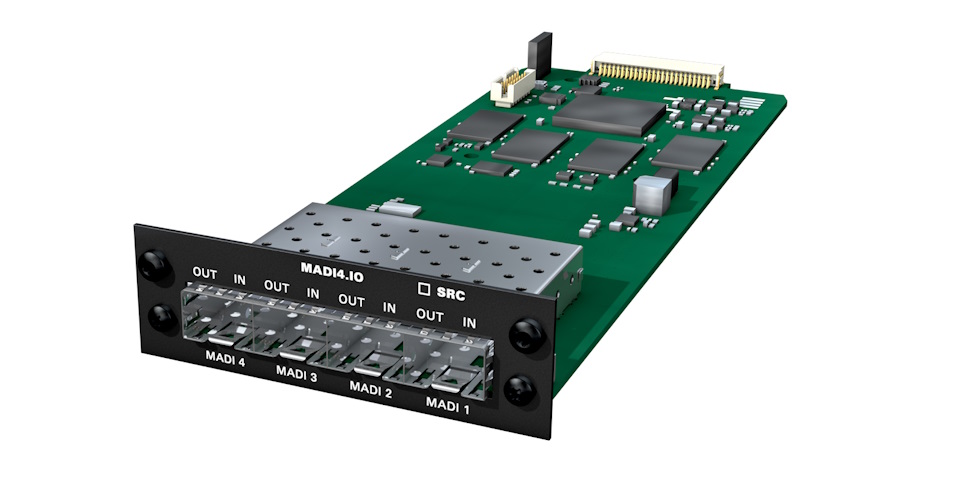
- 256 channels: four empty SFP carriers; can be fitted with optical or coaxial cartridges to suit user preference
MADI4.SRC.IO
- 256 channels: four empty SFP carriers; can be fitted with optical or coaxial cartridges to suit user preference. Includes HD Sample Rate Conversion
Converter modules
There are two categories of Converter modules – analogue and AES3. All Converter modules use either one or two DSUB-25 connectors for I/O using the well-known “Tascam” pinout, now standardised within AES59. A range of 19” breakout boxes (1U) is available from DirectOut: these present inputs and/or outputs on the front panel as XLRs (BNCs also available for AES3id I/O).
Rear panel DSUB-25 connectors allow standard 8-way screened-pair cables to connect to the PRODIGY and most other DirectOut units with slots for analogue and AES3 I/O. Alternatively, DSUB-25-to-XLR breakout cables are readily available from third-party audio cable fabricators.
All modules provide 64 channel operation at 44.1/48 kHz sample rate (FS), 32 channels at 2FS or 16 channels at 4FS. The modules support 56/57/64 channel operation with 48k or 96k frames. They are AES10 compliant.
Converter modules
There are two categories of Converter modules – analogue and AES3.
All Converter modules use either one or two DSUB-25 connectors for I/O using the well-known “Tascam” pinout, now standardised within AES59. A range of 19” breakout boxes (1U) is available from DirectOut: these present inputs and/or outputs on the front panel as XLRs (BNCs also available for AES3id I/O). Rear panel DSUB-25 connectors allow standard 8-way screened-pair cables to connect to the PRODIGY and most other DirectOut units with slots for analogue and AES3 I/O. Alternatively, DSUB-25-to-XLR breakout cables are readily available from third-party audio cable fabricators.
Analogue modules
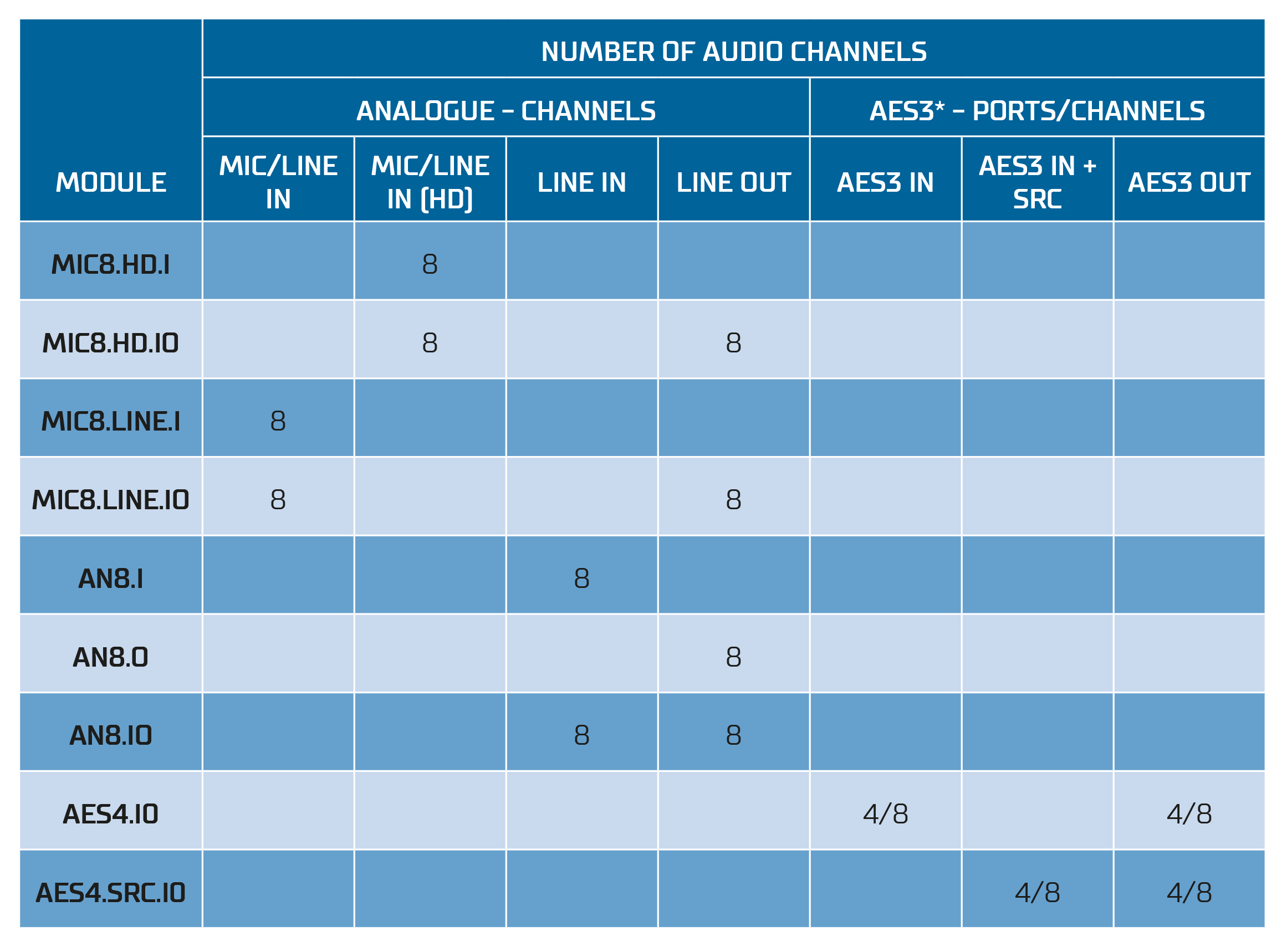
All analogue I/O modules support eight channels – either inputs, outputs or both. All inputs and outputs are balanced. DirectOut’s analogue circuitry provides audibly superior performance, with very low noise and THD figures, and an extended frequency response (typically +/-0.5 dB from 10 Hz to FS/2), resulting in exceptional audio clarity.
Experienced engineers will immediately appreciate the difference that these modules make.
AN8.I

AN8.I – eight line inputs; internal jumpers select +15, +18 or +24 dBu as 0 dBFS reference levels.
AN8.O
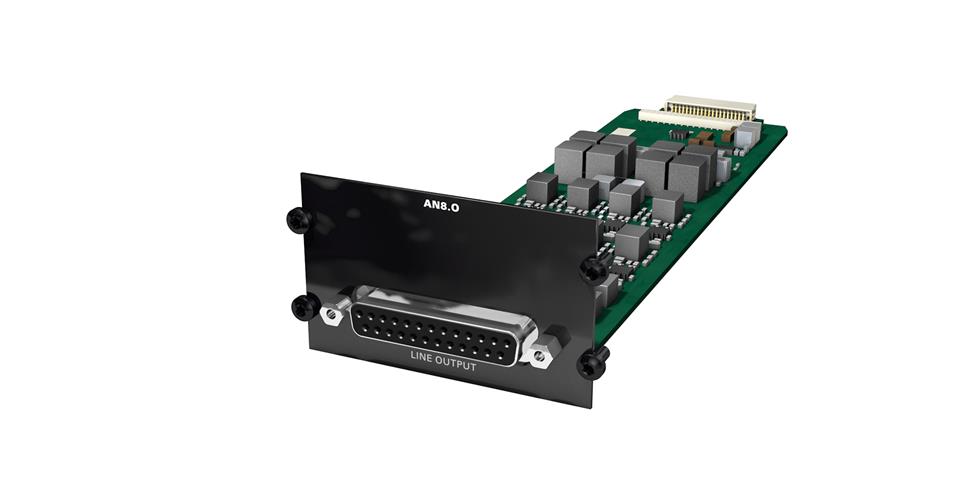
AN8.O – eight line outputs; internal jumpers select +15, +18 or +24 dBu as 0 dBFS reference levels.
AN8.IO
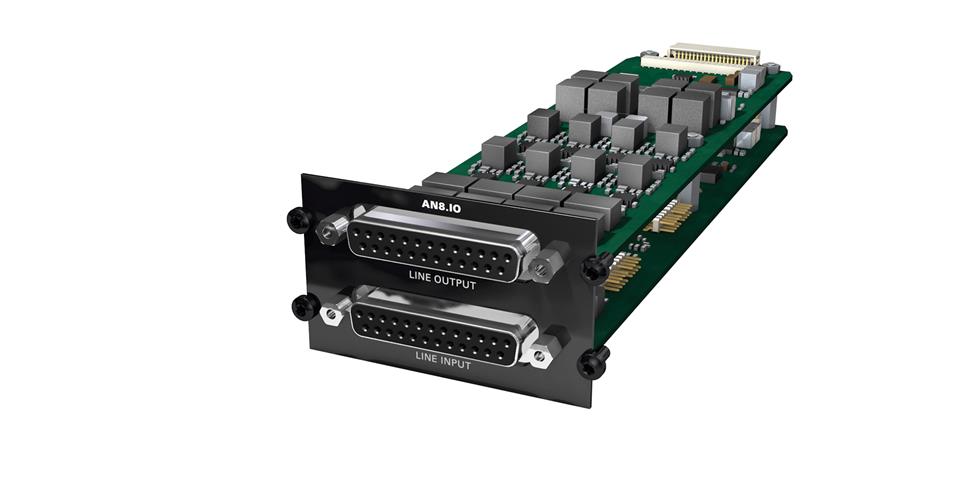
AN8.IO MkII – eight line inputs and eight line outputs; internal jumpers select +15, +18 or +24 dBu as 0 dBFS reference levels.
MIC8.LINE.I
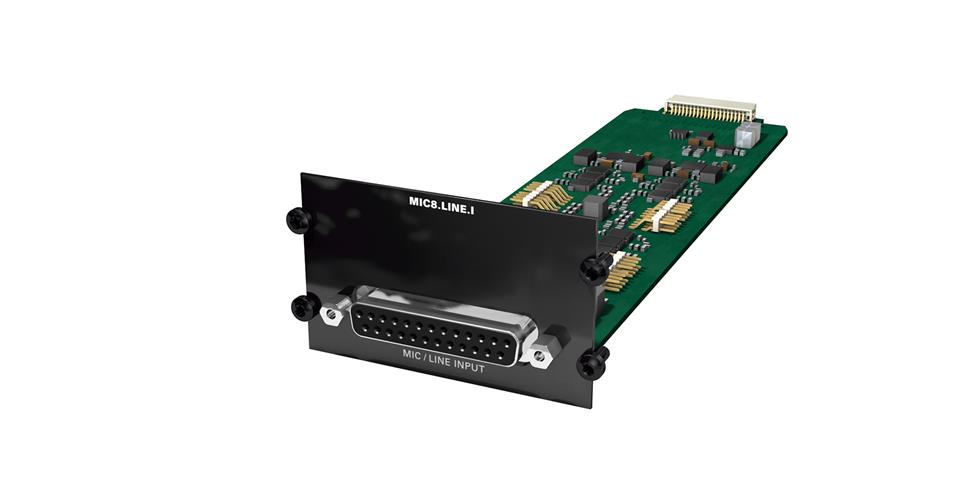
MIC8.LINE.I – eight mic/line inputs, sensitivity range -55 to +24 dBu for 0 dBFS. 48 V phantom power and a 9 dB pad are both selectable, per-channel.
MIC8.LINE.IO
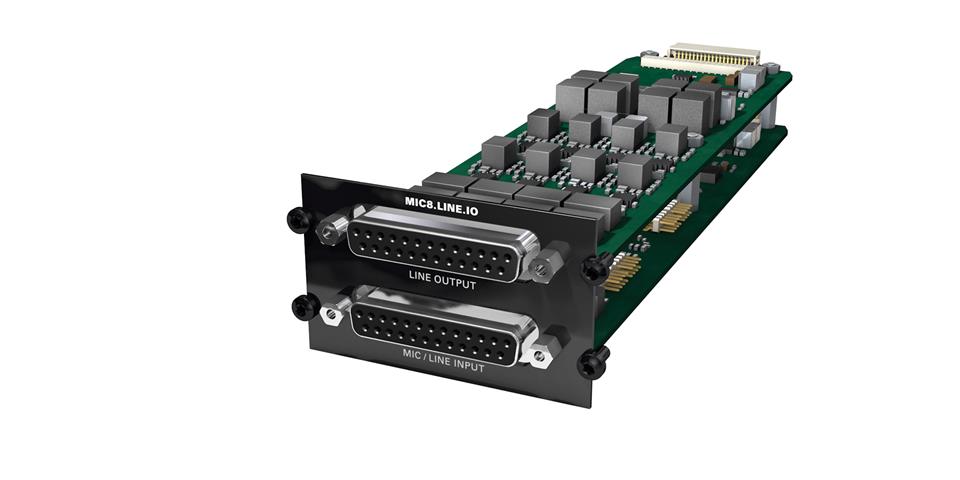
MIC8.LINE.IO – eight mic/line inputs plus eight line outputs. Input sensitivity range is -55 to +24 dBu for 0 dBFS; 48 V phantom power and a 9 dB pad are both selectable, per-channel. Internal jumpers select +15, +18 or +24 dBu as 0 dBFS reference levels for the line outputs.
MIC8.HD.I

MIC8.HD.I – eight High Definition mic/line inputs, sensitivity range -55 to +24 dBu for 0 dBFS. 48 V phantom power and a 30 dB pad are both selectable, per channel. The HD mic preamps have been designed to suit very high quality recording and broadcast applications.
MIC8.HD.IO
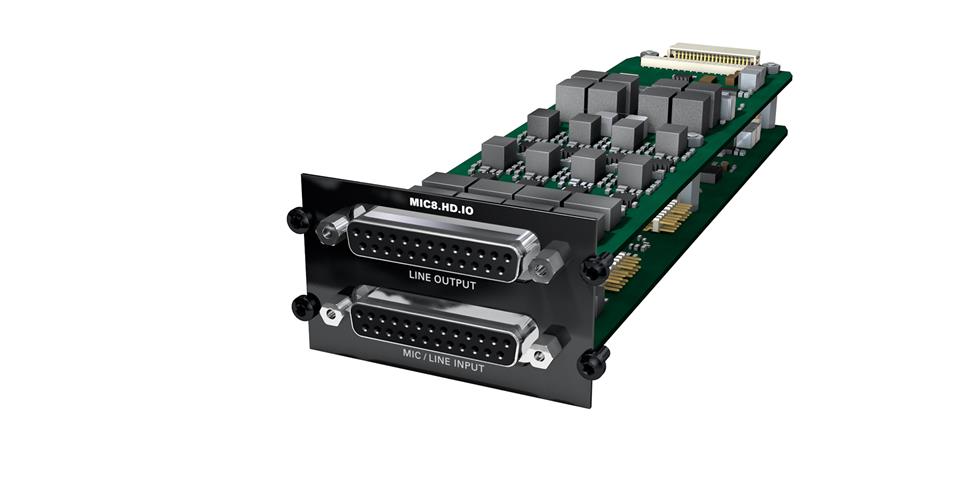
MIC8.HD.IO – eight High Definition mic/line inputs plus eight line outputs. Input sensitivity range is -55 to +24 dBu for 0 dBFS; 48 V phantom power and a 30 dB pad are both selectable, per channel. The HD mic preamps have been designed to suit very high quality recording and broadcast applications. Internal jumpers select +15, +18 or +24 dBu as 0 dBFS reference levels for the line outputs.
AES3 modules
Two AES3 modules are available, each providing four AES3 inputs and four AES3 outputs, each AES3 input or output carrying two independent audio channels. All sample rates from 44.1 kHz to 192 kHz are supported.
AES4.IO
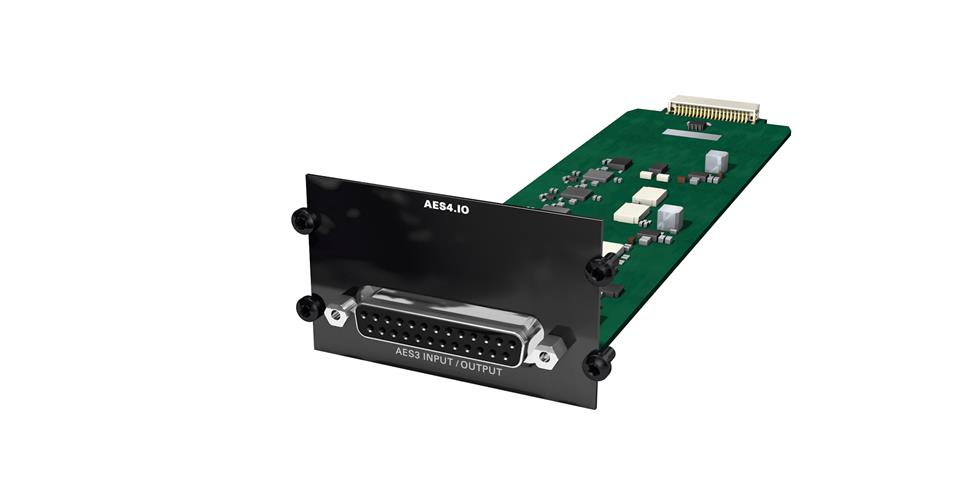
AES4.IO – AES3 I/O module: eight audio input channels and eight audio output channels, arranged as 2 x 4-port AES3 pairs.
AES4.SRC.IO

AES4.SRC.IO – as AES4.IO, but with switchable input Sample Rate Conversion.